
Anti-Glare & Non-Glare Hard Coating for Plastics
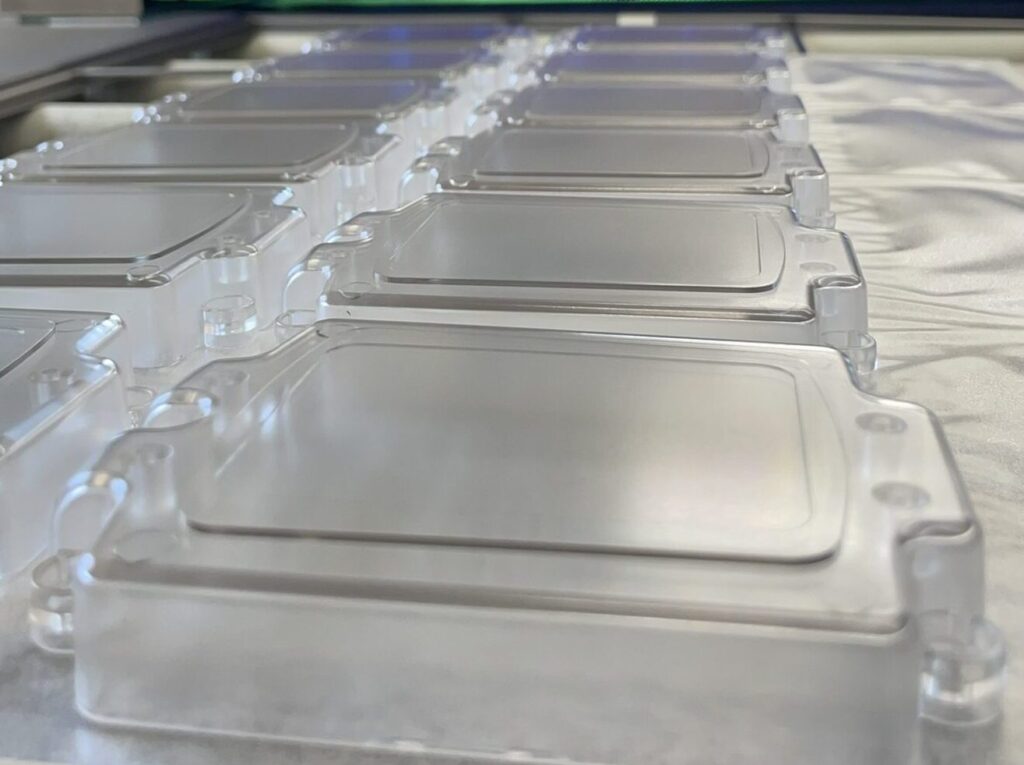
Reduce distracting reflections. Improve display readability. Protect the plastic surface.
Optiguard™ Non-Glare is a specialist anti-glare hard coating for plastics, designed to reduce unwanted reflections from acrylic, polycarbonate and other suitable plastic surfaces.
The coating creates a controlled matt/textured finish that scatters and diffuses reflected light, helping reduce distracting glare and improve the viewing experience of displays and optical components.
Unlike a simple matt finish, Optiguard™ Non-Glare also provides the additional benefits of a hard coating, including improved abrasion resistance and chemical resistance.
The result is a plastic surface that is easier to view in challenging lighting conditions while also being better protected against everyday wear.
Optiguard™ Non-Glare is a reflection-control coating for plastics developed by Panel Graphic to improve the viewing performance and durability of plastic surfaces.
Reflections can be a significant problem for displays, control panels and optical components. Bright overhead lighting, windows, sunlight and other light sources can reflect from a smooth plastic surface and make the information beneath it difficult to see.
Optiguard™ Non-Glare tackles this problem by creating a fine matt/textured surface.
Rather than allowing incident light to reflect directly back towards the viewer as a concentrated reflection, the textured coating scatters the reflected light, reducing the intensity of distracting glare.
At the same time, the hard coating provides improved resistance to abrasion and chemical attack, helping the surface remain durable during everyday use.
Modern displays are used in environments with increasingly challenging lighting conditions.
A screen may look perfect in a controlled showroom but become difficult to read when installed in:
The problem isn’t necessarily the brightness of the display itself.
It can be the reflection from the surface in front of it.
Optiguard™ Non-Glare is designed to address this surface reflection.
Key benefits
Panel Graphic’s Optiguard™ range has been developed to improve the performance of acrylic and polycarbonate components, with hard coating technology offering surface hardness approaching that of glass alongside chemical resistance.
These two terms are often used interchangeably, but they describe different optical approaches.
A non-glare or anti-glare coating uses surface texture to diffuse reflected light.
It reduces the intensity and visual impact of reflections, making them less distracting.
Optiguard™ Non-Glare is particularly suited to applications where a matt appearance and improved glare control are desirable.
An anti-reflection coating uses optical engineering to reduce the amount of light reflected from the surface in the first place.
Panel Graphic’s Optiguard™ AR coatings are specifically engineered to reduce reflection and increase light transmission.
| Requirement | Non-Glare | Anti-Reflection |
| Reduce distracting reflections | ✓ | ✓ |
| Diffuse reflected light | ✓ | — |
| Matt appearance | ✓ | — |
| Gloss appearance | — | ✓ |
| Increase light transmission | Limited | ✓ |
| Optical clarity | ✓ | ✓ |
| Abrasion resistance | ✓ | Depends on system |
| Suitable for displays | ✓ | ✓ |
For applications where maximum optical transmission and low reflectance are critical, an anti-reflection treatment may be more appropriate.
Where the priority is reducing distracting glare and creating a softer, matt viewing surface, Optiguard™ Non-Glare may be the better solution.
Our technical team can help you choose the correct surface treatment for your application.

Improve the viewing performance of hard wearing polycarbonate
Polycarbonate is an excellent engineering plastic because it combines high impact resistance with low weight and good optical properties.
However, a smooth polycarbonate surface can produce unwanted reflections.
Applying Optiguard™ Non-Glare creates a protective matt surface that can reduce these reflections while also improving the surface’s resistance to abrasion and chemical exposure.
This makes non-glare polycarbonate particularly useful for demanding display applications.

Acrylic offers excellent optical clarity and is widely used for display windows, illuminated panels and optical components.
However, highly polished acrylic surfaces can also create unwanted reflections.
Optiguard™ Non-Glare can be applied to suitable acrylic substrates to create a controlled matt finish that helps diffuse reflected light.
This creates non-glare acrylic with additional hard coating protection.
For applications where optical appearance, readability and surface durability all matter, this can provide a highly effective alternative to untreated acrylic.
Panel Graphic has a dedicated coating facility for applying specialist surface treatments to plastic sheets and moulded components in the UK.
The coating process is carefully controlled to achieve a consistent, high-quality finish.
Optiguard™ Non-Glare is applied as a liquid coating using a controlled spray process. Panel Graphic’s coating technology can accommodate both flat plastic sheets and moulded components.
The coated component passes through a UV curing process. High-energy UV light initiates the cross-linking of the coating, creating the hard protective surface.
There isn’t one optical solution that works perfectly for every display.
The best coating depends on:
That’s why Panel Graphic offers a wider family of specialist Optiguard™ coatings for plastics.
We understand the complete plastic component.
Panel Graphic isn’t simply a coating company. We specialise in improving the performance of plastics.
That means we can consider the material, coating, printing, machining, forming and assembly as part of the same project.
Our capabilities include:
Our Optiguard™ range has been developed by Panel Graphic through years of continuous development and application experience.
Optiguard™ Non-Glare is part of Panel Graphic’s specialist range of surface coatings for plastics.
From our Norfolk manufacturing facility, we support customers with specialist plastic coating solutions for prototypes, development projects and production requirements.
Because our coating expertise sits alongside our plastic manufacturing capabilities, we can help develop a complete solution rather than simply supplying a coating.
Tell us what you’re trying to achieve and we’ll help you work backwards to the right material and surface treatment.
A non-glare coating is a surface treatment designed to reduce the visual impact of reflections.
It typically uses a controlled matt or textured surface to scatter reflected light, reducing concentrated reflections and making a display or surface more comfortable to view.
The terms are often used to describe similar technologies.
In practical terms, non-glare generally refers to a matt/textured surface that diffuses reflected light, while anti-reflection coatings use optical layers to reduce the amount of light reflected from the surface.
Optiguard™ Non-Glare uses a matt/textured surface to control reflections.
Yes.
The coating produces a controlled matt/textured appearance designed to diffuse reflected light.
The exact visual appearance depends on the coating specification and substrate.
Yes.
Optiguard™ hard coating technology is suitable for acrylic and polycarbonate substrates, including suitable sheets and moulded components.
Yes.
Suitable acrylic sheets and moulded acrylic components can be considered for Optiguard™ Non-Glare.
Optiguard™ Non-Glare is a hard coating as well as a reflection-control treatment, so it provides improved abrasion resistance compared with untreated plastic.
However, no plastic coating should be described as completely scratch proof.
Yes.
The Optiguard™ hard coating technology provides improved resistance to chemical attack in addition to its optical benefits.
The precise chemical resistance required should always be assessed against the chemicals and cleaning agents present in the intended application.
Potentially, yes, depending on the touchscreen technology and overall optical stack.
Touchscreen applications require careful consideration of surface texture, optical clarity, touch sensitivity and environmental requirements.
Talk to our technical team before specifying the coating for a touchscreen application.
Not necessarily.
They solve slightly different problems.
Non-Glare is particularly useful when you want to diffuse reflections and achieve a matt surface.
Anti-Reflection is better suited where minimising reflection and maximising light transmission are the priorities.
The best solution depends on the display and its environment.
Yes, certain applications can combine anti-reflection and non-glare technologies.
Panel Graphic already offers combined AR/non-glare solutions where a fine matt finish is combined with an anti-reflection treatment.
Can you coat moulded plastic components?
Yes.
Panel Graphic's coating process can accommodate suitable moulded plastic components as well as flat sheets.
Component geometry should be assessed before production to confirm suitability.
Suitability depends on the substrate, coating specification and environmental conditions.
For applications involving prolonged direct sunlight or particularly demanding external environments, we recommend discussing the complete application with our technical team.
Panel Graphic also offers specialist Optiguard™ coatings developed for demanding external conditions.
Looking for an Anti-Glare Coating for Plastic?
If reflections are making your display difficult to read, Optiguard™ Non-Glare could be the solution.
Our specialist non-glare hard coating for plastics combines reflection control with enhanced abrasion and chemical resistance, making it suitable for demanding display, industrial, automotive, marine and electronic applications.
Whether you’re working with polycarbonate, acrylic, display windows, HMI panels, instrument clusters or moulded plastic components, our technical team can help you select the right surface treatment.
Tell us about your application.